Thursday, October 25, 2012

19th century Health and Sports


Health and Sports
Due to the poor environmental conditions, disease in the earlier part of the period ran rampant. As the century progressed and laws passed to correct the health concerns, the death rates of various illnesses began to drop and there were far less instances of ‘epidemic’ proportion. Some noticeable diseases include Chicken Pox, Cholera, Diphtheria, Poliomyelitis, Consumption and Smallpox. Among all of these, Cholera is the one most famous.
Cholera, known as one of the most dreaded of all diseases, acutely infectious, is caused by drinking water from contaminated sources. The first breakout of Cholera happened in India in 1817. Due to the developing international trade, the disease was spread other continents. For roughly counting, there were about six breakouts and 38 million people died during the first hundred years since Cholera found.
 The 19th century also saw the rapid creation, development and codification of many sports, particularly in Britain and the United States. Association football, rugby union, baseball and many other sports were developed during the 19th century, while the British Empire facilitated the rapid spread of sports such as cricket to many different parts of the world. There is one thing has to mention for sports is revive of modern Olympic Games in 1894. The 1896 Summer Olympics, officially known as the Games of the I Olympiad, was a multi-sport event held in Athens, Greece, from April 6 to 15, 1896. It was the first international Olympic Games held in the Modern era. Because Ancient Greece was the birthplace of the Olympic Games, Athens was considered to be an appropriate choice to stage the inaugural modern Games. It was unanimously chosen as the host city during a congress organized by Pierre de Coubertin, a French pedagogue and historian, in Paris, on June 23, 1894. The International Olympic Committee (IOC) was also instituted during this congress. This brought peace and friendship to the young people all over the world.


Reference:
http://logicmgmt.com/1876/overview/medicine/diseases.htm , 10/25/2012

Wednesday, October 10, 2012

5 talking pts


  • The damage to the young generation due to the cruel war
  • The different attitudes of people enrolled in the war against those stayed behind are two extremes
  • A wrong way of encouraging young people going to the battle fields
  • It is a tragedy of the novel and the movie from our eyes, but this satisfied the soldiers' last will
  • The war was cruel and tough, but the soldiers could find their own way to have fun or love during break 

Wednesday, October 3, 2012

Task 2 Paul Baumer


Task 2 Paul Baumer
Paul Baumer is the main character in this book. This man was a high school student before joining the army. By being taught from his teacher that soldier would be a national hero and all the other positive aspects of the war, he was encouraged to join the army not only from others but also his will. There were also three students joined the army with him at the same time. After ten weeks training, they all changed a lot. Though there were only ten weeks, but in Baumer’s eyes, those days were even more worth than the past ten years in school. Baumer and his comrades in arms were sent to the front line of battle field after ten weeks of trainings. The conditions were poor in battle field. Normally soldiers could not get enough food or even a private space when dumping. At the beginning, Baumer complained this, but soon he got used to it. The worst condition was once soldiers on the field, they would never know whether they could make it through or not. Baumer found that the people around him just got fewer and fewer and everything happened on the front line was hard to bear. Sometimes they might get too dirty for them to tolerate thus the flees would be anywhere on the body; the supplies were not in time such that they got nothing to eat and had to fight against the cold weather at the same time; shouting and screaming were everywhere you could hardly tell whether it was from enemies or companions; all the ground was on fire filled with dead bodies and blood. Everything was horrible but unstoppable for Baumer. He felt sorrow and pain when he lost his close friend Franz Kemmerich, who left him first. When he saw people struggling crawling back to base and died in hospital, he could no more felt the pride teacher once told him but pain and death instead.
Front line was like a cage, and people inside became animals. So did Baumer. But it was lucky for Baumer because he got a chance to go home. However, when he got home, he could not feel love but questioning instead. People around him thought he was a coward and they laughed at his attitude of war. But he was only about 20 years old, all he did during these years was killing enemies. His life was meaningless. He was disappointed and distressed. Those people at back didn’t know the cruel of the war. So he decided to go back to the front line again. As he wished, he died eventually.
This is Paul Baumer, from an optimistic, patriotic and passionate person to a fear, distressed and meaningless soldier.    

Task 1


This chapter was mostly described about the life before joining the army and early days of being a soldier. The memory for Paul Baumer was clear at the beginning. During the school days, people treated the poems and other compositions as preciousness. But as they leaving homes and becoming soldiers, those memories would be torn apart by the cruel life in war.
The life in the army is quite different from normal life. Battle could change what people think and how people judge things, especially the sense of worth. The war showed no sympathy to the people enrolled in it. Those young soldiers, they were close friends, helping each other, standing back to back. But as the battle started, with the strict and cruel training in army, their minds were twisted. It was totally a rebuild for those young soldiers since they were just students before. The slogans from their teachers felt so weak here. People in the army considered the physical benefit much more than mental. The Corporal Himmelstoss from No.9 platoon was a typical example of who got twisted by the war. He treated his soldiers as animals as I see. He was extremely mean to Baumer and Kropp. The corporal often asked Baumer doing unreasonable things. But these two young soldiers they just did not yield to him. They fought as hard as they could finally they owned the respect from him.
Though those soldiers had fought together and came up with deep relationships, life was still worthless. When Franz was wounded and lying on the bed, only Baumer came to his side and tried to comfort him. Muller cared about Franz’s boots much more than his life. The doctors were so cruel to those injured soldiers. Death was so easy for them to talk about. Franz was hopefully at the beginning but as time passed, he realized that he would probably die. Franz lost the hope and gave away his precious boots to Muller finally. Baumer was sorrowful and upset when he lost Franz but when he turned the boots to Mulle, Muller was very happy and gave Baumer some small prizes in return.     

Wednesday, September 19, 2012

My work on CDU-party


My work on CDU party

The CDU is Christian based, it stands for Christian Democratic Union. Once received this project, our group divided the work into several. After each done, we just emailed our information to a person who took care of the PowerPoint presentation. I was one of three people who did the CDU party platform. Since this party was Christian based, the principles of Christian Democracy were applied. They believed that Christian understanding of humans and their responsibility toward God. But things changed little bit since 1994. New CDU party platform formed that time, focusing on freedom, justice and solidarity resting on Christian foundations. The present party platform was created in 1994 in response to domestic and international changes such as German reunification and the end of the East-West conflict. Similarly, Germany is again facing new circumstances on both the home and global fronts with the lines between the two become ever more blurred.
CDU has a wide range of membership. It consists however of people adhering to a variety of religions as well as non-religious individuals. The CDU's policies derive from Political Catholicism, Catholic social teaching and political Protestantism, as well as fiscal conservatism and national conservatism. The CDU was the first proponent of the social market economy, although the party has adopted more liberal economics policies since Helmut Kohl's term in office as the Chancellor of Germany (1982–1998).
Opponents of the CDU are the Social Democratic Party of Germany (SPD), The Left party and Alliance '90/The Greens. The CDU has however governed in two Grand Coalitions with the SPD as well as in various coalitions with the Alliance '90/The Greens. The CDU rejects coalitions with either The Left or right-wing extremist parties.
The Free Democratic Party (FDP), a classical liberal party, is the preferred partner of any CDU government since the CDU and FDP have similar attitudes towards fiscal policy. As a conservative party, the CDU supports stronger punishments of crimes and supports involvement on the part of the Bundeswehr in cases of domestic anti-terrorism offensives as well as in natural catastrophes. In terms of immigrants, the CDU supports initiatives to integrate immigrants through language courses, and aims to further control immigration. Dual citizenship should only be allowed in exceptional cases.
Basing on my studies and other group work, I thought CDU is a liberal party. For example, they have some support to the immigrant and they are against abortions. Also, there are not only male chancellors but also females. From these facts we can also see the liberty.  

Sources:

Wednesday, September 5, 2012

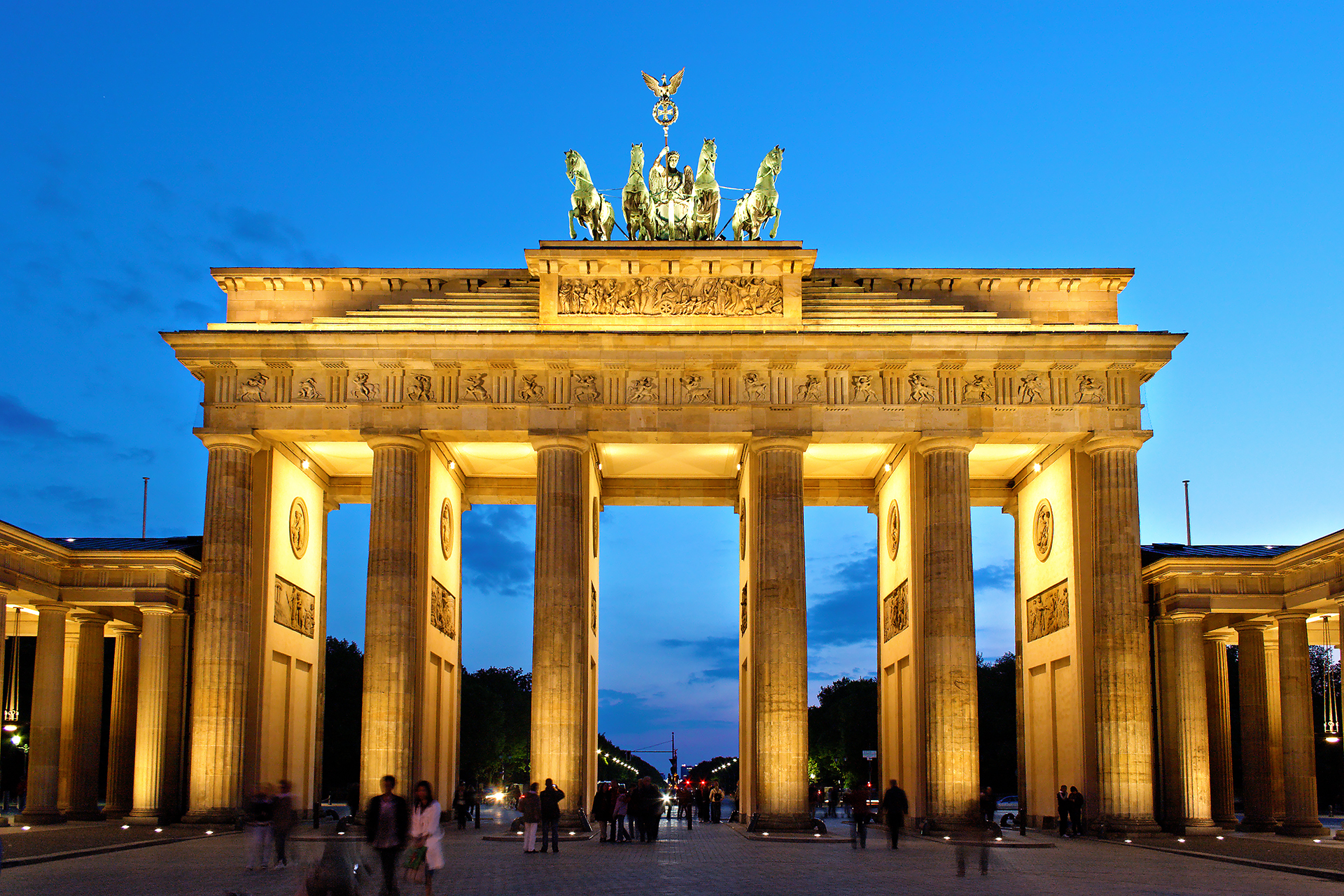
Brandenburg


History


Brandenburg is relatively new in its current form. It was one of the federal states that emerged after the reunification in 1990. In medieval times (and into early modern times) the area now known as Brandenburg was considered to be the area known as Prussia. Prussia was the first unified state of the German empire. From 1772 to 1918, the area was known as the Kingdom of Prussia, but the area still referred to as Brandenburg was the most important part of the kingdom, becoming a province of Prussia in 1815. There was a sharp increase in population during this time due to a booming industrial economy. Prussia became a free state in 1918 and in 1920 the greater Berlin area marked itself as its own province. Potsdam became the capital city of the Brandenburg province.

After World War II Prussia was dissolved and Brandenburg was split into separate districts. Brandenburg was a part of East Germany, where there was a socialist government.  Brandenburg remained a big player in the agricultural economy of East Germany. On October 15, 1990 the present form of Brandenburg was founded. The reunification of Germany brought much unemployment to the state, as its economy could not compete with the western half of Germany. Recently, the unemployment rate has declined and the economy has picked up significantly.


The Landscape


Brandenburg is one of the new federal states that were re-created in 1990 when West and East Germany were unified.  The state of Brandenburg is densely forested and contains Europe’s most extensive landscape of rivers and lakes.  There are more than 3000 lakes with the Havel, Spree, and Oder rivers.  It contains Lower Oder Valley National Park, three Biosphere Reserves and eleven Nature Parks.  Brandenburg surrounds Berlin but does not include the national capital and city-state.  The capital city of Brandenburg is Potsdam.  Other cities include Cottbus, Brandenburg an der Havel, and Frankfurt (Oder). 

Potsdam is situated on the River Havel and is the capital of Brandenburg.  It is the largest city in Brandenburg with twelve palaces, including Sanssouci Palace – the summer residence of King Frederick II.  Before 1918, Potsdam was the residence of the Prussian kings and German Kaisers.  Potsdam has many architecturally significant buildings associated with Prussian royalty.  The Babelsberg Film Studio is located in Potsdam and is the oldest, large-scale, film studio in the world.  There are three public colleges and more than 30 research institutes in the city.

Cottbus is the cultural centre of the Lower Sorbian minority.  It is also home of Brandenburg University of Technology and the maths/science-oriented Max-Steenback-Gymnasium, which is named after the physicist Max Steenbeck.

Brandenburg an der Havel, also known as Brandenburg City, is located on the banks of the River Havel and is the oldest town in the state.  During the Nazi era it had a concentration camp, one of the first in Germany.  After closing the camp, the Nazis used a prison in Gorden, a suburb of Brandenburg an der Havel, that later became the Brandenburg Euthanasia Centre.  Brandenburg an der Havel was one of the first locations where Nazis experimented with killing their victims by gas. 

Frankfurt (Oder) is a smaller city in Brandenburg located on the Oder River, which separates Germany and Poland.  Frankfurt (Oder) is not to be confused with the larger city Frankfurt am Main located in the state of Hesse.   Here, in Frankfurt (Oder) you can walk across the city bridge and be in the Polish town Slubice.  Frankfurt an der Oder has one the largest Gothic churches and one of the oldest medieval town halls.  The 18th century German novelist and playwright, Heinrich von Kleist, is the town’s most famous resident.


Demographics


This is a state in northeastern Germany that surrounds, but is independent of the city of Berlin. Poland is to the east of this state and also bordered by other states of Germany such as, Mecklenburg-Vorpommern in the north, Freistaat Sachsen in the south, Saxony-Anhalt in the west and Lower Saxony in the northwest. The capital of this state is Potsdam. The population was recorded as 2,495,635 in 2011. The state area is 29,478.63 km2(11,381.76 sq mi). 

Economy


The main economic industries include agriculture, automotive industry, energy industry, electrical industry and optical industry. 7 universities and 21 other higher-education institutions with more than 182,000 students, as well as over 100 private and public institutes and development facilities make Berlin-Brandenburg one of the densest research networks in Europe.

Brandenburg is a vital place for logistics. Nine out of ten of the biggest German logistic companies are located here, German Railways, German Post, Kühne+Nagel, Dachser, DPD, UPS, Rhenus, Panalpina and Fiege. There are also hundreds of bringing companies located here. The GDP of this state ranked 11th in 2011 which was 55,090 Euro (76,680 US$).